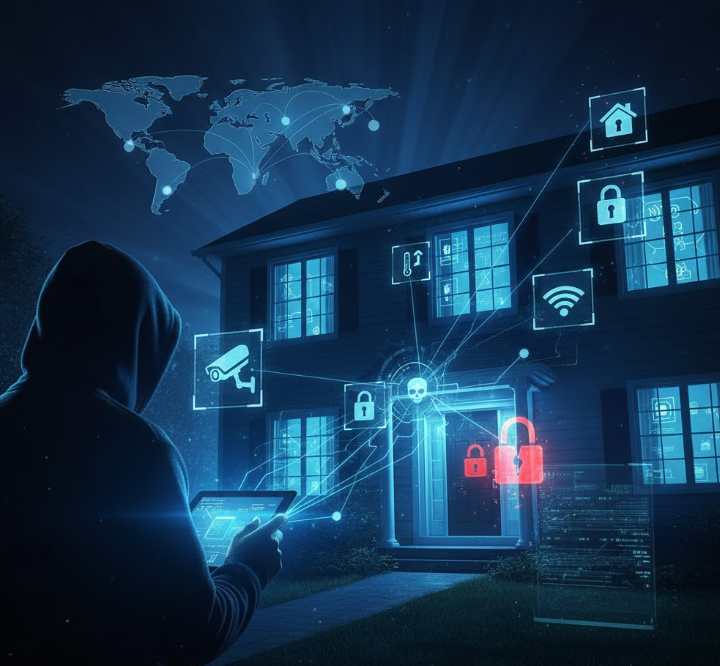
Smart home devices deliver enhanced convenience which comes with security risks because hackers now search for weak points in all connected systems. Your network becomes vulnerable to outside attacks through unprotected smart speakers and cameras and thermostats and locks and other devices which serve as entry points. The number of connected devices worldwide is growing rapidly, and cybercriminals know that weak security settings create easy targets.
Unauthorized users can easily access systems through weak passwords and default settings.
Default or weak passwords act as the main reason that hackers succeed in breaking into smart homes. Many devices ship with pre-set logins that are easy to guess, and hackers use automated tools to scan for them. Changing default usernames and setting strong, unique passwords for every device — ideally using a password manager — significantly raises the bar against intrusion. The best way to protect your accounts is to stop using passwords multiple times and to change them on a regular basis.
Your home Wi-Fi router stands as the central connection point which attackers usually target first to gain control of your smart devices. Protecting your Wi-Fi network from unauthorized access requires you to implement strong encryption through WPA3 standards or WPA2 standards with a custom network name and password. You should establish a distinct network for your smart devices which will prevent hackers from accessing your essential systems after they take over one device. Using a VPN when accessing smart devices over public Wi-Fi also protects data in transit from interception.
The organization requires both firmware updates and authentication practices as fundamental security protections.
Outdated software and firmware enable unauthorized users to access systems because manufacturers release updates to solve security problems. Users should enable automatic updates on all systems while they need to check for available updates on devices that do not perform automatic updates. Two-factor authentication (2FA) provides extra security because hackers need to complete a second verification step after they guess a password.
The organization should eliminate remote access to decrease the number of potential attack pathways.
Smart home applications enable users to operate their systems from remote locations; however, this feature contains security threats. The unsecured state of remote access functions results in an expanded attack surface for cybercriminals. Users should turn off remote access features for devices which do not require this function while they should permit third-party connections only when those connections support secure validated authentication. The organization should conduct regular app permission reviews while removing all unused devices from their smart home system to decrease potential security risks.
Devices require continuous monitoring to detect suspicious behavior which must be responded to without delay.
The system needs active defense measures while it should identify indicators of system infiltration through unexpected system operations and attempts at unauthorized entry and strange device behaviors. Users should check available device activity logs while they need to shut down all devices which display suspicious behavior through power off or reset functions. The moment a device shows signs of compromise, it must be removed from the network and all networked devices must have their passwords and software updated to prevent further breaches.
The security posture of the organization improves when they select specific vendors and implement device separation methods.
The selection of smart home devices should begin with trusted companies which deliver ongoing security updates through their products. The brands provide essential security functions which include encrypted communication together with advanced authentication methods. The protection of personal computers and work devices through IoT device segmentation requires organizations to maintain their IoT systems on separate network connections which include guest networks.
The security of smart home systems requires continuous monitoring which needs active protection measures.
Smart technology does not stop hackers because they actively seek easy ways to enter systems which have weak security settings. The security system for smart homes requires organizations to implement strong unique passwords and secure Wi-Fi and constant updates and 2FA and restricted access for remote devices. Your connected devices will continue to work effectively after you implement these measures because they secure your system against unauthorized entry and prevent data theft.
You May Love to Read: Quick Ways to Tell if an Image Is Real or AI-Generated
News Source: Pcmag.com