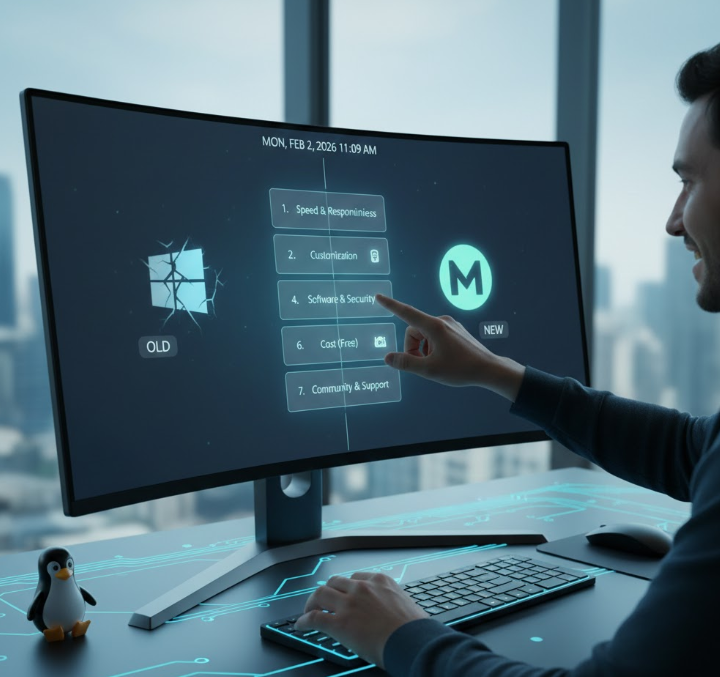
Having spent years on Windows 11 and its frequent notifications, its active widget bars, and artificial intelligence-based prompts, switching to Linux Mint and Cinnamon desktop was like a fresh breeze. Mint is a fresh and approachable start to a workspace: a plain and simple panel, standard menus, no annoying ads and notifications that keep forcefully telling me about their new features or updates. The outcome? much less interruptions and a desktop that is out of the way as I concentrate on the real job.
Instances in which Windows 11 is effectively marketing to you, like AI assistants, ads in the Settings menu, mixed apps recommendations, and the like, Linux Mint simply serves as a simple and distraction-free interface by default. This was in itself a feeling of getting back to control of my computer.
Customization Is Simpler Without Registry or Hidden Menus.
Mint does not require digging into obscure menus or making dangerous registry modifications to achieve the kind of desktop customization that it provides. Want a classic start menu? Done. Would you rather have a dock on the bottom or the left or the top? Easy. Setting panels are intuitive and all available when it comes to widgets, themes and applets. It’s not forcefully designed, no buried switches behind multiple layers of AI suggestions — simple options that perform their purpose.
To both power users and casual users, this openness is more personal than Windows, in which extensive customization can demand third-party applications or third-party system file hacking.
Performance Sneezes on Humble Equipment.
A very prominent difference was the lightness of Linux Mint. Although Mint was running on older machines, its responsiveness and overall speed were faster than when I was using Windows 11 in the same machine. Mint boots fast, consumes often less RAM and hardly ever stutters in daily chores such as browsing the web, editing documents, or changing desktops.
With several apps running, including Firefox, LibreOffice, and several terminals, memory consumption is also not excessive, and the system does not seem slow. In the case of older laptops or desktops re-purposed as a productivity device, this efficiency is enough to make Mint interesting.
App Management Is Low profile and unproblematic.
Linux Mint employs APT packages to manage packages with graphical front-ends such as Software Manager, which simplifies and makes the process of software installation and upgrades clear. No compulsory store logins, no background applications are installed quietly, and no bloatware suggested by AI. All the packages include clear descriptions, and you pick only what you desire.
In comparison, Windows 11 tends to recommend applications, Xbox connection, or included software that occasionally clog the system and requires attention. This is not a marketing-first approach of Mint but a user-first approach.
Privacy Works Out of the Box with Unlimited Customizations.
Another area that Mint dominated by far was privacy. Linux Mint, by default, does not track telemetry, does not ask to log in to the cloud, and does not make usage information available to a corporate server. Windows 11 with its privacy settings locked down, nonetheless, does communicates with Microsoft in ways that cannot be fully configured.
Mint wins big when it comes to users who prioritize straightforward privacy lessons without having to toggle a few options or have the App track them using the powers of artificial intelligence.
Software Freedom and Open Formats Count.
There is a freedom to using the open-source software instead of being trapped by proprietary ecosystems. LibreOffice and Gimp as well as VLC are all available on Linux and are updated using the identical package manager. There is no reliance on the store of a single vendor, there is no fear that a publisher will refuse a critical application due to policy reasons.
The file formats too are more universal: PDFs, ODF files and open media standards are free of hidden proprietary bits and this makes the sharing with others less resistant to compatibility issues.
System Updates Do Not Disrupt Your Process.
Lastly, the update system at Mint does not interfere with your workflow. Updates will be done at your will – you have the option of updating any time you want. It does not have a monthly update that restarts automatically at the most inopportune time, does not have pushy artificial intelligence notifications, does not have unexplained post-reboot problems.
This serene stability allows a user to and use it with ease and much less stress compared to having to jump back into the patching cycles of windows 11.
Who Must Think about Better Use on a Daily Basis.
Linux Mint is not flawless: parity is yet to be achieved in some of the specialized Windows software required to use workarounds or be virtualized, and gamers who are locked to proprietary libraries will not find it in Linux Mint. However, to be productive on a daily basis, those who value their privacy, those who have old hardware, or those who are weary of the intrusive AI-centered OS design, Mint offers a refreshing, user-centric experience that in many aspects will beat Windows 11 in 2026.
News Source: Pcmag.com
More like this: Rate the Laptops and Desktops You Use (or Manage) at Work