
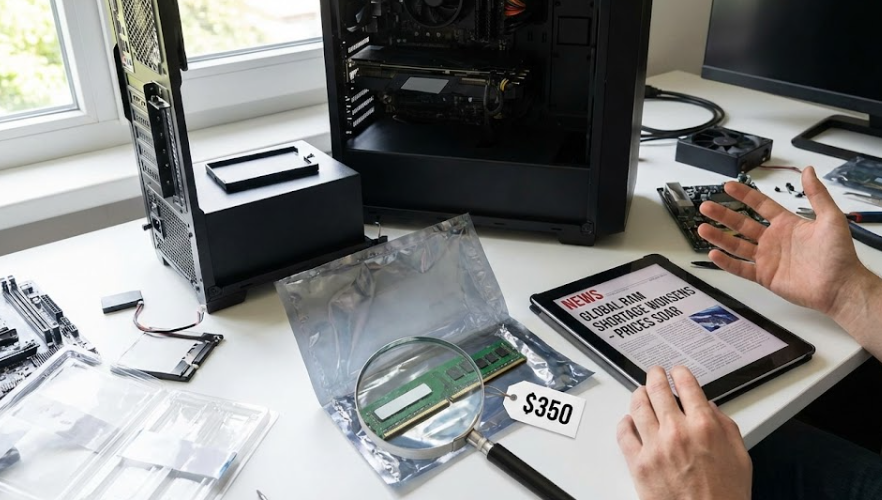
The so-called RAM crisis or the RAMpocalypse is a large world shortage of memory chipsets, which has pushed the price of desktop-PC RAM dramatically higher and supply constrained for both builders and consumers. This is being driven by massive demand by artificial-intelligence data centers that eat large portions of the DRAM and NAND capacity in the world – reducing the number of chips available to consumer-grade desktop applications. This has caused prices of memory to skyrocket and analysts indicate that the shortage, which is projected to continue in 2026 or even later.
The reason why RAM is so expensive to PCs.
RAM is one of the most critical components of a desktop PC, and this is the location where the working space is found in terms of performance and critical to the running of operating systems and applications. RAM kits in modern computers have increased in size and speed although they also demand a sophisticated manufacturing capacity. The fact that production is more and more being moved over to high-bandwidth memory to serve AI servers – a more lucrative application of factory lines. The supply of consumer RAM has been reduced by the disruption, and the prices have risen even on older DDR4 modules that used to be cheap.
The average prices of desktops are also increasing, due to the increased component costs incurred by PC makers and custom builders, analysts believe that the prices of PCs will overall increase by as much as 8 percent or more in 2011. Other sellers have gone further to sell systems without memory so that they can provide their own RAM in future.
Shopping Smart: Do Not Buy RAM when Prices are at the Peak.
Be careful, in case you only require RAM and not a complete system. The prices are fluctuating and a purchase when in a peak can be costly. Instead:
Find package offers: Buy a memory and a motherboard together or as part of a package: Bundles can be cheaper than separate memory purchase.
Select older standards: DDR4 is usually cheaper than DDR5 today, and in many applications 16 GB -32 GB of DDR4 would be more than sufficient.
Second hand markets: Reliable sellers offer used RAM at much lower prices than new kits, but you have to make sure you check the compatibility and test the stability.
These plans will allow you to evade the increase in the price of memory that might continue into 2026.
Look at Preassembled PCs or BYO RAM Builds.
Since RAM is very expensive in itself, in some cases pre-assembled computers may be a better choice – a system with memory can be sold at a lower total price than the individual parts.
A third possibility is the Bring Your Own RAM (BYO RAM) model: a number of manufacturers are now permitting you to use your own memory kit to be installed in an otherwise complete system. This will save you money as you will be able to browse the RAM offers by yourself or apply the RAM you have.
Live Around What Can Be Afforded.
Should you still want to construct a desktop yourself, you are able to modify your plan in order to cut some costs:
Make priority on the necessary components: CPUs, cases, and coolers have not been increasing in price as much as memory, and so should be budgeted first.
Start with less capacity RAM: It is better to start with 16 GB or a single 32 GB RAM stick and add it later when prices have stabilized.
Save by waiting: In some cases, it is better to spend money and upgrade now with bare minimum memory than spend money and wait forever till prices come down.
Maximize Your existing System.
Use of a PC already, there is no need to upgrade right now, particularly with the current prices of memory:
Minimize applications in the background: Closing down start up applications and those that consume a lot of memory can stretch your available memory.
Smart use of virtual memory: Operating systems may use the storage as the virtual memory, which assists in performance when the physical RAM is insufficient.
Storage: Boosting performance: A faster SSD will not displace RAM but can minimize the slowdowns associated with paging and caching.
Final Thoughts
The RAM crunch is transforming the desktop PC ecosystem to include an increase in prices and scarcity of stock which could likely persist into the majority of 2026. It is not always clever to buy RAM at its most expensive point in time but there are methods of saving money, assembling it wisely, or even getting a complete system at a lower price, particularly through the advice of keeping an eye out on the deals, looking at older modules, and with the use of build-your-own-RAM systems. It is still possible to put together or purchase a good PC without becoming penniless with sufficient patience and planning.
News Source: techradar.com
Read Also: Your Phone’s Favorite Apps Might Be Stealing Data

