
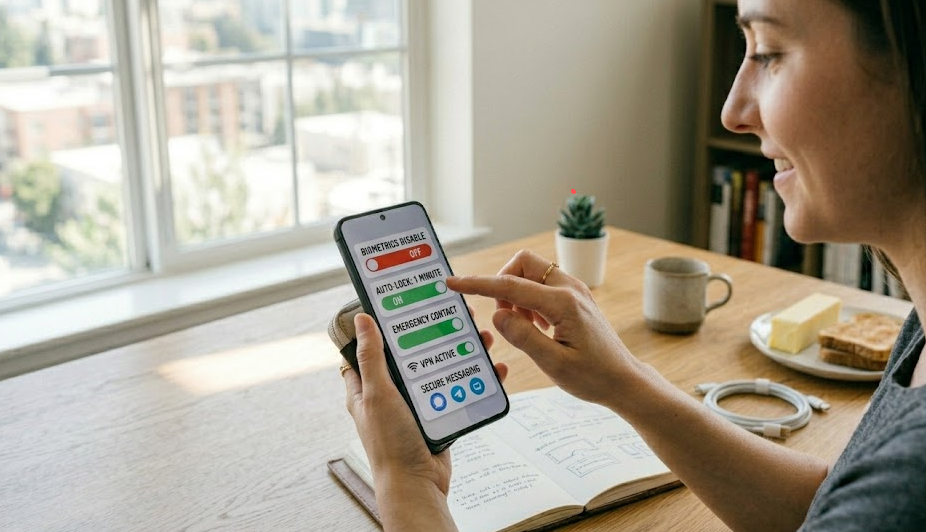
Being at a protest usually implies the high-density and well-controlled environment where the personal information may be endangered. There is a lot of important information on our Smartphones, messages, contacts, photos and the phone’s location history, that could be compromised in case of a lost, stolen, or hacked Smartphone.
Before heading out, it is possible to take some precautionary measures which will help preserve your privacy and make sure that your data is safe. These steps can go far either with using Android device or iPhone.
Lock Down Your Device
The initial and the most crucial process is to make sure that your phone is locked with a powerful password. Do not use easy PINs such as 1234 but use longer numeric password or an alpha numerical password.
Biometric unlocks such as fingerprint or face unlock are convenient but they are not best in some cases which are sensitive. Turning them off and using a passcode can provide a superior level of control of who gains access to your device.
In addition, activate such features as auto-lock so that your phone is locked fast when it is not in use. This reduces the chances of making any accident when you forget about it.
Limit Location Tracking
Place information is able to show where you are and where you have been. You can also ensure that you have turned off location services on apps that do not absolutely require them before you attend a protest.
Another thing is to turn off location history tracking in the settings of your device. This helps to avoid the fact that your movements are stored and may be retrieved later.
To get an extra degree of privacy, do not use social media to update in real-time or to tag your locations during events.
Secure Your Communications.
Conversations that can hold sensitive information are usually stored on messaging apps. Fight on the frontline by using applications that provide end-to-end encryption with only you and the recipient being able to read messages.
Also, it can be considered to use disappearing messages where possible. This option is an auto-deleting conversation, which will remove some data on your phone.
You can also be prudent to close applications that you do not require or deactivate their accounts in the short term to reduce exposure.
Prepare for Emergencies
On the way out, walk a couple of steps to get ready to unforeseen circumstances. Copy valuable information such as photographs and contacts in order to avoid losing them in the event that your phone is damaged or seized.
You could also make emergency contacts and also turn on a feature such as Find My device (Android) or Find My (iPhone) so that you can find your phone in case it gets lost.
Risk can also be minimized by carrying very little of your personal data on your device during the event.
Make Your Online Life Simple.
The smaller the amount of data in your phone, the better will be. Think about uninstalling unnecessary applications, clearing the last history, and leaving the accounts that you will not use.
The implementation of airplane mode should also be considered when you can turn airplane mode to restrict your connectivity and minimize chances of tracking. But remember you might have to be connected to the network, to communicate or get directions.
Eventually, this is aimed at reducing exposure at the expense of necessary functionality.
Stay Safe and Informed
Going to a protest is all about being heard and keeping the personal information safe is also a priority. You can minimize the possible risks by locking your device, minimizing tracking, and planning in case of an emergency.
These are easy measures that will keep your phone a useful part of your life instead of a liability so that you can concentrate on the cause and be safe and not ignorant.
Read Also: Stop Google From Tracking You
News Source: PCmag.com

