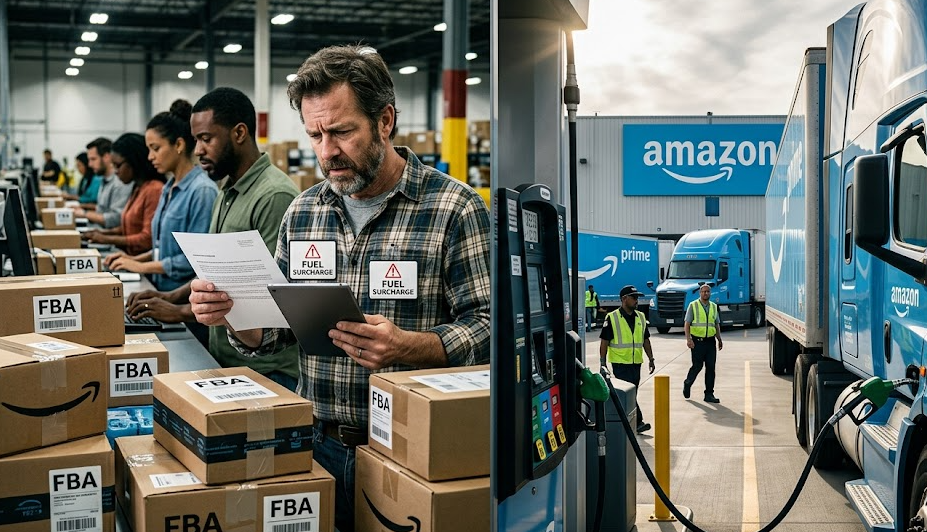
The introduction of a new fuel surcharge by Amazon will lead to increased operational costs for merchants, which will subsequently result in higher prices for consumers. The decision to implement a price increase comes as Amazon faces two major challenges
Amazon has introduced a new fuel surcharge which will start charging merchants who use its services. The United States and Canada will begin charging this fee on April 17 to all sellers, but its full application will start in early May.
The surcharge applies to fulfillment costs instead of product prices, but merchants will face higher total expenses because of this fee. The added fee will create widespread effects across Amazon because multiple sellers depend on its logistics system.
Rising Fuel Costs Behind the Decision
The primary driver of this change is the sharp increase in global fuel prices. The ongoing geopolitical situation has caused energy prices to increase because of conflicts that target oil supply routes.
All companies within the logistics industry need to change their pricing systems because transportation expenses and delivery costs have increased. Amazon used to pay these expenses, but the company now needs to pass part of the expenses to sellers because it can no longer handle all financial responsibility.
The industry has adopted this practice because all major carriers, including UPS and FedEx, along with national postal services, now charge fuel surcharges.
Impact on Third-Party Sellers
The new surcharge will directly affect third-party merchants who operate within Amazon’s marketplace ecosystem because they represent a significant portion of all online sellers. Small and medium-sized enterprises experience severe profit margin decline when their fulfillment costs increase even by small amounts.
Amazon states that its surcharge requires sellers to pay only a few cents per unit, which represents a minor cost. Merchants will need to either change their pricing to handle the extra costs or they will need to handle all extra costs to maintain their market position.
Consumers May Feel the Effects
Sellers bear the surcharge cost, but it will eventually affect end customers. Sellers usually pass their higher operational expenses to consumers, which means that product prices will increase across many different items.
People who experience rising living costs will tend to purchase fewer products which will create a ripple effect on the economy. Even small price increases across multiple products can influence consumer spending patterns.
A Temporary Measure or Long-Term Trend?
Amazon will keep the surcharge active until fuel prices drop because the company considers it a temporary charge. The fee will remain active until the company decides to end it, but no confirmation exists for this ending schedule.
The current fuel cost situation matches the 2022 situation when the company introduced a new charge to handle fuel price hikes. The company will establish this trend as an ongoing practice, which will become standard operating procedure during economic downturns.
The fuel-related surcharge which Amazon introduced shows how global e-commerce platforms face increasing operational difficulties. The upcoming price changes for both sellers and consumers will create a new pricing system which will affect the months ahead.
You may like: Best Budget Tech Picks
News Source: Pcmag.com