
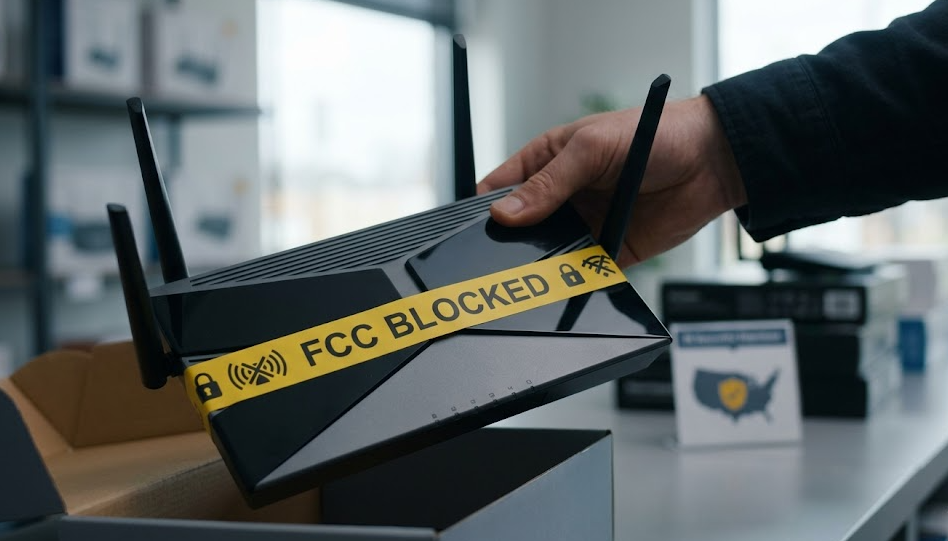
The Federal Communications Commission (FCC) has introduced a sweeping new rule that effectively bans the sale and import of new consumer Wi-Fi routers manufactured outside the United States. This decision is part of a broader push to tighten security around connected devices and protect critical infrastructure.
The move adds foreign-made routers to the FCC’s “Covered List,” which includes equipment considered a potential threat to national security.
This is a significant escalation in US tech policy, especially since routers are essential devices used in nearly every home and office to connect to the internet.
Why the FCC Is Taking Action
The primary reason behind the ban is cybersecurity concerns. US authorities argue that foreign-manufactured routers could be exploited by hackers or foreign governments to gain access to sensitive data or disrupt networks.
Officials have pointed to past cyberattacks—such as the “Volt Typhoon” incidents—where vulnerabilities in routers were used to target infrastructure and households.
According to regulators, these risks are serious enough to justify restricting future imports of such devices. The concern isn’t just about data theft—it also includes potential espionage and large-scale network disruptions.
What the Ban Actually Covers
It’s important to understand that the rule does not affect existing routers. If you already own a Wi-Fi router, you can continue using it without any issues.
The ban applies specifically to new models that have not yet received FCC authorization. Previously approved devices can still be sold and imported.
However, going forward, manufacturers will need special approval—or shift production to the US—if they want to sell new router models in the country. This could significantly limit the number of new devices entering the market.
Impact on Manufacturers and the Market
The decision could have a major impact on the global router industry. Most consumer routers—including those from well-known brands—are manufactured outside the US.
Companies like TP-Link, which holds a large share of the US market, may face increased scrutiny or pressure to relocate production.
Other brands such as Netgear, Asus, and Google also rely on overseas manufacturing, meaning the entire supply chain could be affected.
Industry experts warn that this could lead to higher prices, fewer choices, and potential supply shortages as companies adjust to the new regulations.
What This Means for Consumers
For everyday users, the immediate impact is minimal. Your current router will continue to work, and existing models will remain available for purchase—at least for now.
However, over time, the market may change. With fewer new models entering the US, consumers could see limited upgrades, higher costs, or delays in new technology releases.
On the positive side, the FCC argues that the move will improve long-term security by reducing vulnerabilities in widely used devices.
A Sign of Broader Tech Tensions
This ban reflects a larger trend of governments tightening control over technology supply chains. Similar actions have been taken against foreign-made drones and telecom equipment in recent years.
The focus on routers shows how critical everyday devices have become in national security discussions. As more devices connect to the internet, ensuring their safety is becoming a top priority for regulators.
The Bottom Line
The FCC’s decision to block new foreign-made Wi-Fi routers marks a major shift in how the US approaches technology and security. While current users won’t be affected immediately, the long-term impact could reshape the router market.
For now, it’s a reminder that even the most common household devices play a crucial role in the broader digital ecosystem—and in national security.
You may like: Don’t Go to a Protest Without Doing This to Your Phone First
News Source: Pcmag.com

