Updates with severe bugs that cause worsening functionality rather than enhancement have been one of the greatest frustrations to Windows 11 users in the recent past. Some users have experienced boot failures, system crashes, startup issues and even shutdown due to recent security patches and Microsoft has been forced to provide emergency out of band patches. Such issues destroy the trust in the platform and cause the daily maintenance to become something dangerous, which is an essential experience that Microsoft cannot yet fully master even after several years of its existence.
It be it black screen, services crashing, crashing cloud application post-patch, the issue of stability is starting to appear in more versions of Windows 11, and it seems that quality assurance and update testing requires reinforcement.
Troubleshoot Relentless Performance And UX Responsiveness Issues.
Windows 11 continue to be sluggish and inconsistent in its performance, particularly in its daily use, such as opening the File Explorer or using the context menu. Others have criticized that even File Explorer itself can be noted to be slow and unresponsive compared to Windows 10, although the issue has been fixed in recent preview releases although only partially.
Also, some animations and transitions (Task View or swapping virtual desktops) may be jagged on most computers, which takes away the impression of the polish expected by users in a modern operating environment. Performance complaints are likely to expose more underlying problems with the prioritizations and system resource allocation of activity by the UI and Microsoft must refined these aspects in case Windows 11 is to be experienced as genuinely fast and modern.
Minimize Bugs And Enhance Processes of Quality Assurance.
Windows 11 still launches with a series of bugs which are unprofessional to have in a flagship operating system. The glitches ( UI inconsistencies, system failures, etc. ) are recurrent among the users even years after the release of the program. It is increasingly being felt that new features (particularly those driven by AI) are being focused on rather than correcting long-standing fundamental issues.
The common feeling among people is that the quality assurance (QA) processes at Microsoft should be reconsidered. The bugs include problems with login and unpredictable behavior in core apps which implies that the testing coverage and regression control are not well-coordinated. The solution to this would be to fix and have a more predictable, reliable user experience.
Get AI Tune Down Forced and Back To Basics.
The move by Microsoft to integrate AI throughout windows 11, including Copilot buttons in Notepad, and agentic workflows has been received with mixed opinions. Innovation is not unwanted, but user perception is that basic usability concerns and stability should come first before the new AI features which at times interfere with workflows or seem invasive.
A middle ground of reinforcing the OS base first – and only then overlaying it with experimental AI, would go a long way in appeasing both the traditionalists and the early adopters.
Bring UI Consistency and Customization to a More Mature Level.
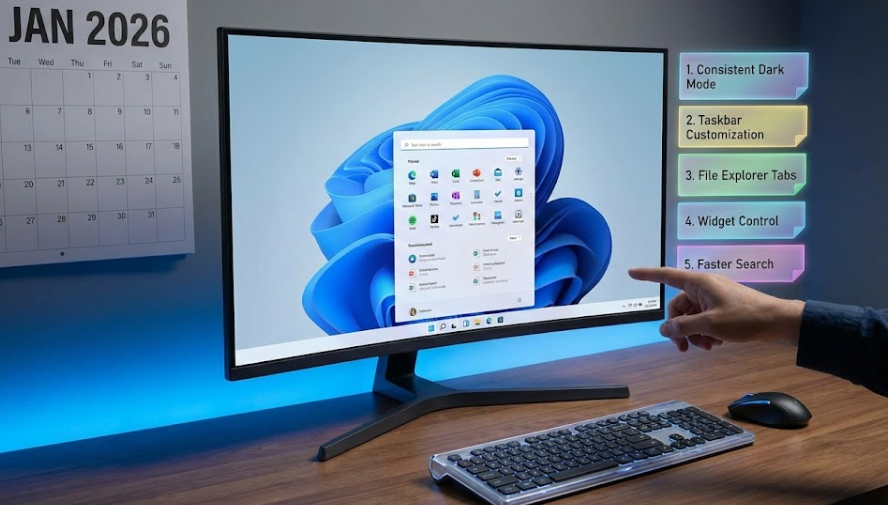
The other criticism one is likely to hear is that Windows 11 does not have the visual consistency and customization opportunities in the user interface. The overall experience is still marred by legacy features of older control panels, a mixed style guide and inconsistent design language between native applications.
Such basic customization as taskbar placement and theme uniformity (e.g. real dark mode everywhere) are desired by the user as well, which many competitors provide.
Windows 11 is yet to have a solid base in 2026, but these aspects positively affect the platform, keeping it without an impression of being properly polished, reliable, and user-friendly. When Microsoft takes note of such fixes and remains innovative, it will be in a position to enhance adoption and satisfaction among millions of users around the globe.
Read also: This $249.99 Microsoft Visio 2021 Lifetime License Now Costs Just $10
News Soource: Pcmag.com